2026年10月
健康・検査のことStool and Urine Samples in Japan: A Lab Technician's Step-by-Step Guide
 書いた人:臨床検査技師30年・超音波検査士プロフィール
Before your health checkup, you received some small containers. But the instructions are in Japanese. I wrote this article for you.
After reading it, you will know how to collect stool and urine samples, and the common mistakes to avoid.
I am a clinical laboratory technician. I have worked in medical testing in Japan for many years. Every day, I perform tests for many people.
First, the Overall Flow
- Stool: Collect samples on two days before your checkup.
- Urine: Collect it on the day of your checkup. Whether you collect it at home in the morning or at the venue depends on the facility. Please follow their instructions.
The shape of the containers and the steps differ a little between facilities and kits. Please also check the instruction sheet that came with your kit.
How to Collect a Stool Sample (Fecal Occult Blood Test)
This test checks for blood in your stool that you cannot see. Bleeding from the intestines does not always happen every day. Collecting samples on two days makes it easier to find.
Today's stool test uses the immunochemical method. It reacts only to human blood (human hemoglobin). So eating meat or certain vegetables basically does not make the result positive.
On the other hand, menstrual blood, bleeding from hemorrhoids, or blood from the anus mixed in while collecting can make the result positive.
Also, bleeding from the stomach or duodenum is hard to detect with this test, because stomach acid and digestive enzymes change the blood. This test mainly looks for bleeding in the large intestine.
A negative result does not completely rule out colorectal cancer. If you have symptoms or concerns, please see a doctor even if your result is negative.
In Japan, many people die of colorectal cancer. Among cancers, it is the second leading cause of cancer death in men and the first in women (2024). Finding colorectal cancer early is important. That is why taking this screening test matters.
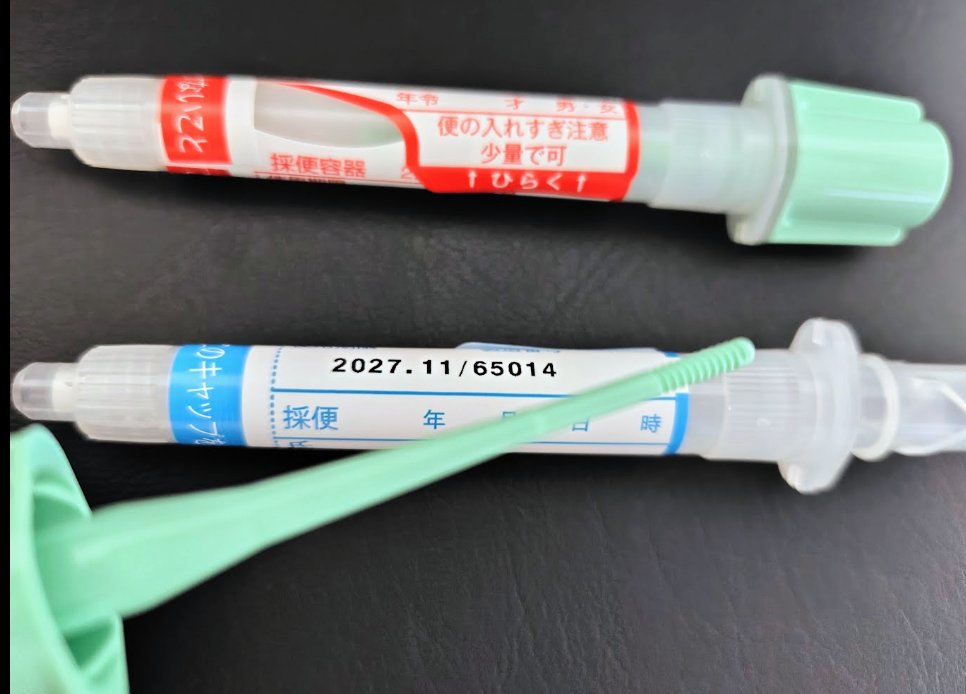
There are two containers. Use one container for each day. Do not put two days of samples into one container. The labels for day 1 and day 2 may be different colors.
Collect your samples on two days as close to your checkup as possible. Two days in a row is best, but some days nothing comes out.
The collection period and the submission deadline depend on the facility and the test kit. There is no single rule for all of Japan. Please follow the instructions that came with your kit.
- Keep your stool from falling into the toilet water. Place toilet paper on the water. Some kits include a special sheet of paper for this. Float it on the water, and it can be flushed afterward. Be careful with automatic toilet flushing. Use the bidet (bottom wash) only after collecting your sample.
- Open the correct side of the container and take out the stick. In most kits, twist and pull out the cap with the stick attached. Do not open the other end.
- Scrape the surface of the stool in several places with the tip of the stick. Stroke the surface widely and evenly. The right amount is just enough to fill the grooves at the tip of the stick.
- Put the stick back into the container and close it firmly. Push it straight in, hard. Once it is in, do not pull it out again.
- Write your name and the date. Write the date you collected the sample. A waterproof pen (such as an oil-based marker) is best, so the ink does not run.
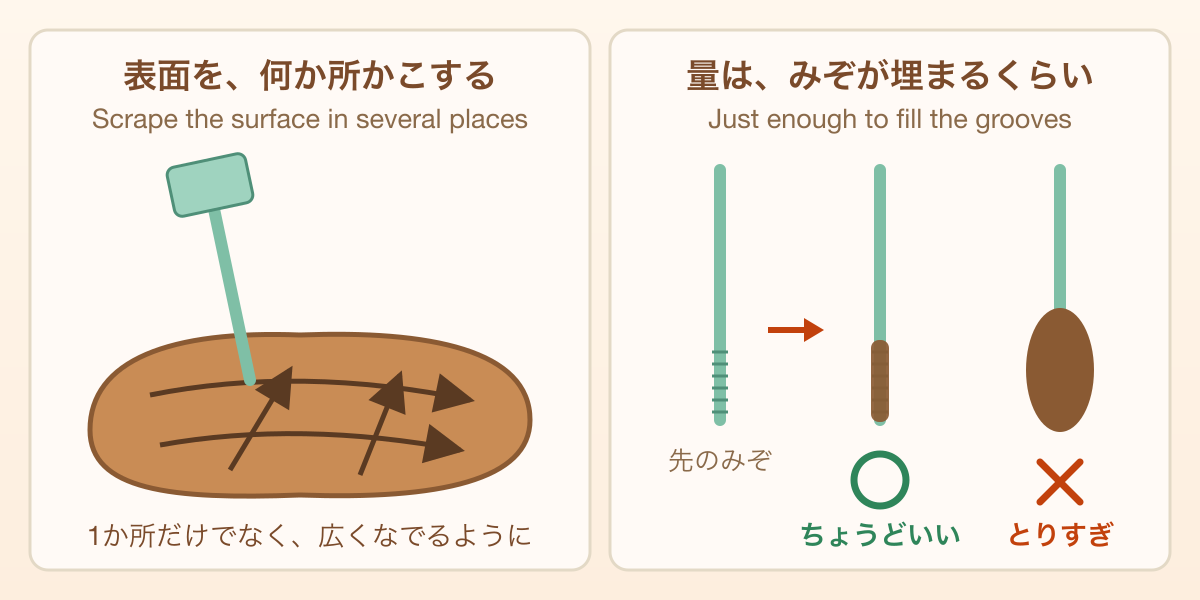
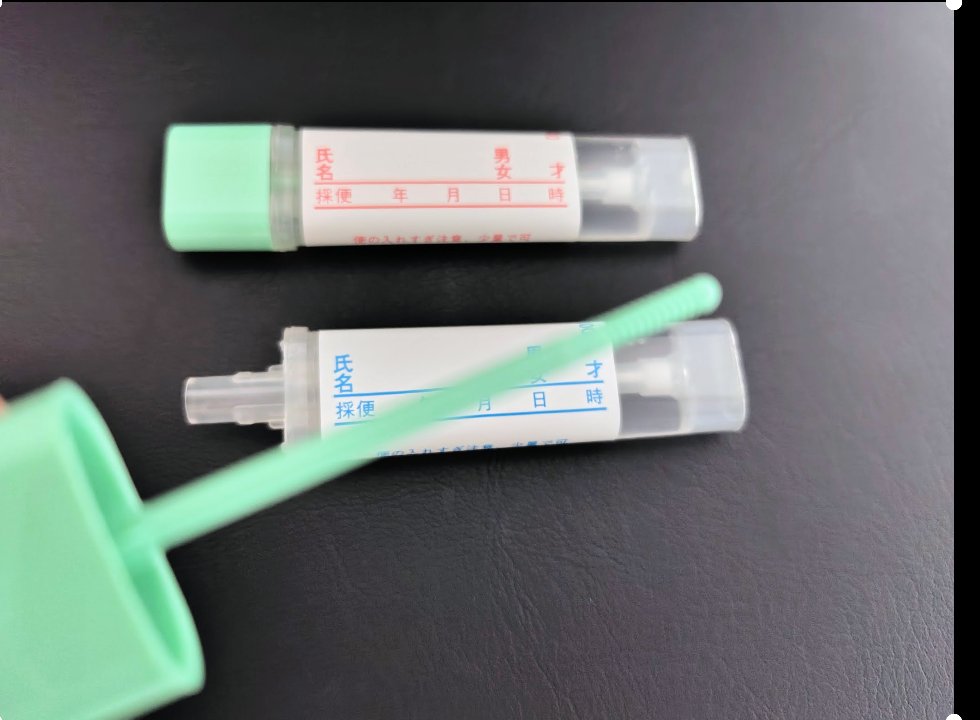
Do not throw away the liquid inside the container. Do not add water, either.
Storage: If your kit's instructions say how to store the samples, follow them first. In general, keep the samples somewhere cool until you submit them. Many kits suggest a refrigerator or a cool, dark place. But many people do not want to put them in the refrigerator, and that is fine. I tell people, "Keep them in a cool place where the temperature does not rise, and submit them as soon as you can." Avoid direct sunlight and places near a heater. In summer, or when the room is warm from heating, a cooler bag with an ice pack is a good idea.
I also recommend putting the containers in a sealed plastic bag, such as a zipper bag. It helps with the smell, and you can carry them without worry.
Deadline: Follow the deadline in your kit's instructions. It differs between facilities and kits. At my workplace, we ask people to submit both containers within four days, counting the day they collected the first sample. For example, if you collect the first sample on Monday, submit both by Thursday. This is only my workplace's rule. If you are not sure whether your samples can still be used, ask the facility before throwing them away.
How to Collect a Urine Sample
Let the first few seconds of urine go into the toilet. Then collect the middle part in the cup. This is called a "midstream sample" (中間尿, chuukan-nyou). The first part of the urine may wash bacteria from around the urethral opening into the sample. Collecting the middle part helps reduce this.
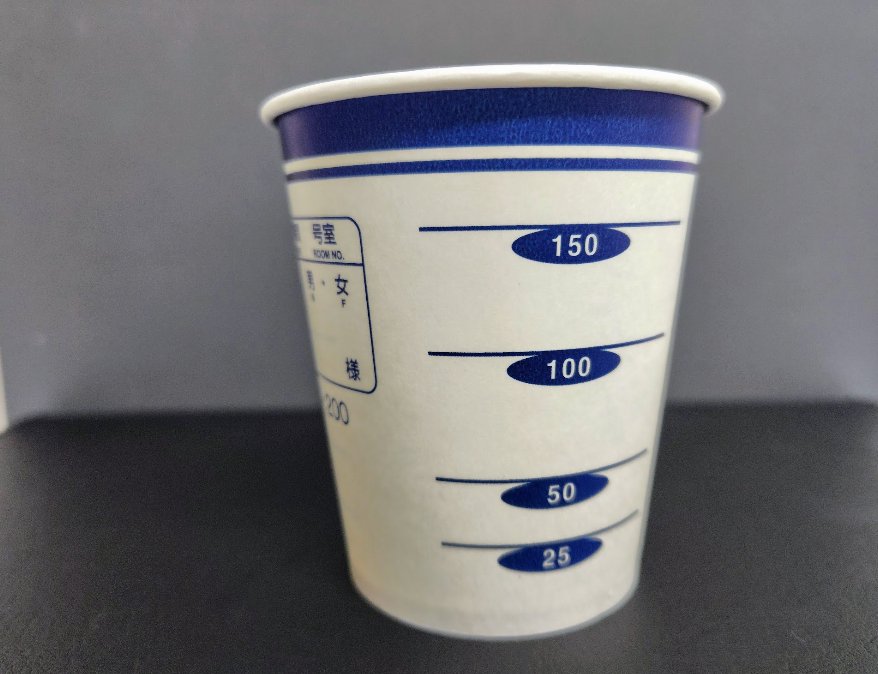
At my workplace, about 25 ml is usually enough, and 50 ml is plenty for the tests we do. The required amount may differ depending on the facility and the tests. Please follow the instructions on your cup or from the staff. The paper cup may have measurement lines on it.
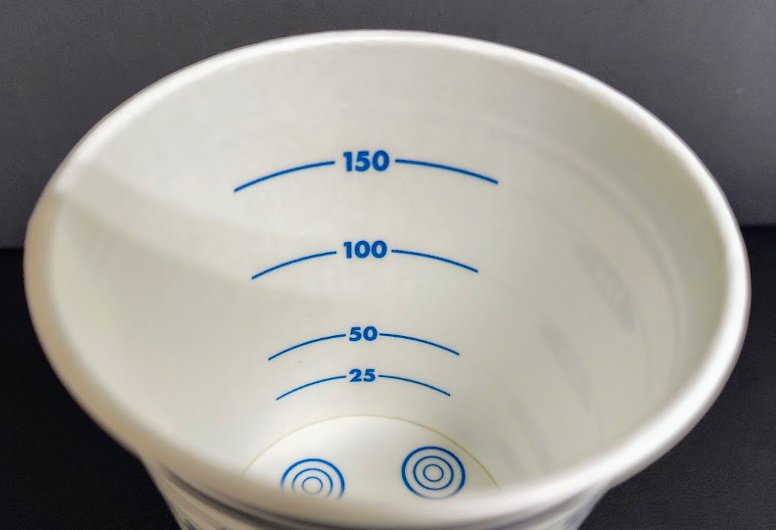
▲ The inside of the cup. At my workplace, filling up to the 25–50 line is enough.
Urine tests are not only done with test strips. A test that looks at urine under a microscope (urine sediment) needs at least 10 ml on its own. We may also measure urine amylase. That is why I explain, "At least 25 ml, and 50 ml is plenty."
Unless you are told to, please do not fill the cup to the top. A full cup is a little hard for us to handle. It can spill easily when you close the lid or carry it.
Some people just cannot urinate. If only a little comes out, please tell the staff at the facility.
Where People Often Get Stuck
There are some mistakes I often see at work. Any of them can happen to anyone when the instructions are hard to understand.
Putting two days of samples into one container Use one container per day. If two days go into one container, the test cannot be done correctly.
Leaving too many days between day 1 and day 2 Keep the two days as close together as possible. Submit both containers together, early.
The sample is washed away by automatic flushing Before collecting, make sure the automatic flush and the bidet do not start. Use the bidet only after collecting your sample. Most people collect their samples at home. But once in a while, someone collects one in the hospital toilet because it comes out easily. As someone prone to constipation, I am a little envious. Toilets in hospitals and other public places may flush automatically with a sensor, just when you stand up. If you can turn off the automatic flush, please do.
Putting the sample in from the wrong end The end for the sample is decided. But some people open the cap at the other end and put the sample in there. That end is for releasing the liquid during testing. Look at the container photo above, and check which cap has the stick before you open it.
Too much stool on the stick, or almost none Too much or too little can both prevent a correct test. Aim for just enough to fill the grooves at the tip.
Forgetting your name or the date If we cannot tell whose sample it is, or when it was collected, the test may not be possible.
The cap is not closed properly Sometimes the liquid leaks out of a submitted container. Please close the cap all the way, firmly.
Filling the urine cup to the top It almost spills, and handing it in becomes difficult. At my workplace, 50 ml is plenty.
Someone who put two collections into one container. Someone who left a long gap between the first and second samples. Someone whose sample was washed away by automatic flushing. I have met all of these people in person. Each time, I realized that things that seem obvious to people used to Japanese checkups can be confusing for someone doing it for the first time.
Tell the Facility First in These Cases
- During your period Menstrual blood can affect stool and urine results. Before collecting your samples, contact the facility. They will tell you whether to collect them now or later. Many facilities ask you not to collect a stool sample during your period. If you have already collected a sample, tell the staff when you submit it. You may be asked to collect it again after your period ends.
- Constipation Many people regularly take laxatives. In Japan, a medicine called magnesium oxide (酸化マグネシウム) is often prescribed. Please do not stop or change your medicine on your own for the test. If you could not collect two days of samples, talk to the facility.
- Hemorrhoids Please do not decide on your own that bleeding is "just hemorrhoids." If your result is positive, be sure to see a doctor.
If you are unsure about anything, please talk to a doctor or the checkup facility.
Phrases to Show at the Reception Desk
You can show the Japanese line to the staff. The other lines are there so you know what it says.
🇬🇧 I'm on my period. What should I do?
🇧🇷 Estou menstruada. O que devo fazer?
🇹🇭 ตอนนี้มีประจำเดือนอยู่ ควรทำอย่างไรดีคะ
🇬🇧 I could not collect a stool sample.
🇧🇷 Não consegui coletar a amostra de fezes.
🇹🇭 เก็บตัวอย่างอุจจาระไม่ได้ค่ะ/ครับ
🇬🇧 I can only pass a little urine.
🇧🇷 Só consigo urinar um pouco.
🇹🇭 ปัสสาวะออกมาได้นิดเดียวค่ะ/ครับ
🇬🇧 I can't read the instructions.
🇧🇷 Não consigo ler as instruções.
🇹🇭 อ่านคำแนะนำไม่ออกค่ะ/ครับ
Things You Don't Need to Do
- Wrapping the urine cup in tissue In Japan, you often see people wrap the cup before handing it in. But it is not a required manner. You can hand it in as it is.
- Wrapping the stool containers many times You can put the stool containers into the bag you were given, as they are. There is no need to wrap them more than that.
Summary
- Stool: two days, from the correct end, the right amount
- Urine: the middle part, the amount your facility asks for
- Don't forget your name and the date
To learn how to read your results, see Got Your Health Checkup Results in Japanese?.
This article is based on my experience as a clinical laboratory technician and general knowledge. Procedures differ between facilities and kits. For diagnosis and treatment, please always consult a medical institution.
おひとりさま検査技師
臨床検査技師として病院に30年。生理検査全般を担当、とくに超音波検査(おもに心エコー)。地方在住・50代・おひとりさま。 検査室から見えることと、暮らしのことを書いています。詳しいプロフィール